Do you remember when you were learning to write your ABC’s? Didn’t it seem soooo hard? I look at old writings my mother saved from when I was 5, 8, even 10 years old and get quite a giggle. So wonky!
I am now in my late 50’s and, as I’m sure you can relate…penmanship is second nature. We don’t even think about it. We old fogies who learned and still practice cursive, execute the letters just like breathing. Perhaps your handwriting isn’t as aesthetically pleasing as others’, but it is fluid and easy because of the length of time you have been doing it.
This difficult-to-fluidity concept parallels many aspects of being a painter. When you first start, it doesn’t often feel fluid because of so many moving parts we need to grasp and simultaneously execute. Our goal as artists is to see and translate, but even at a high level of artistic achievement, seeing is more difficult than one would think, and translation and execution come in at a close second on the challenge scale. How can we make painting feel like it’s flowing out of us as easily as writing a note?
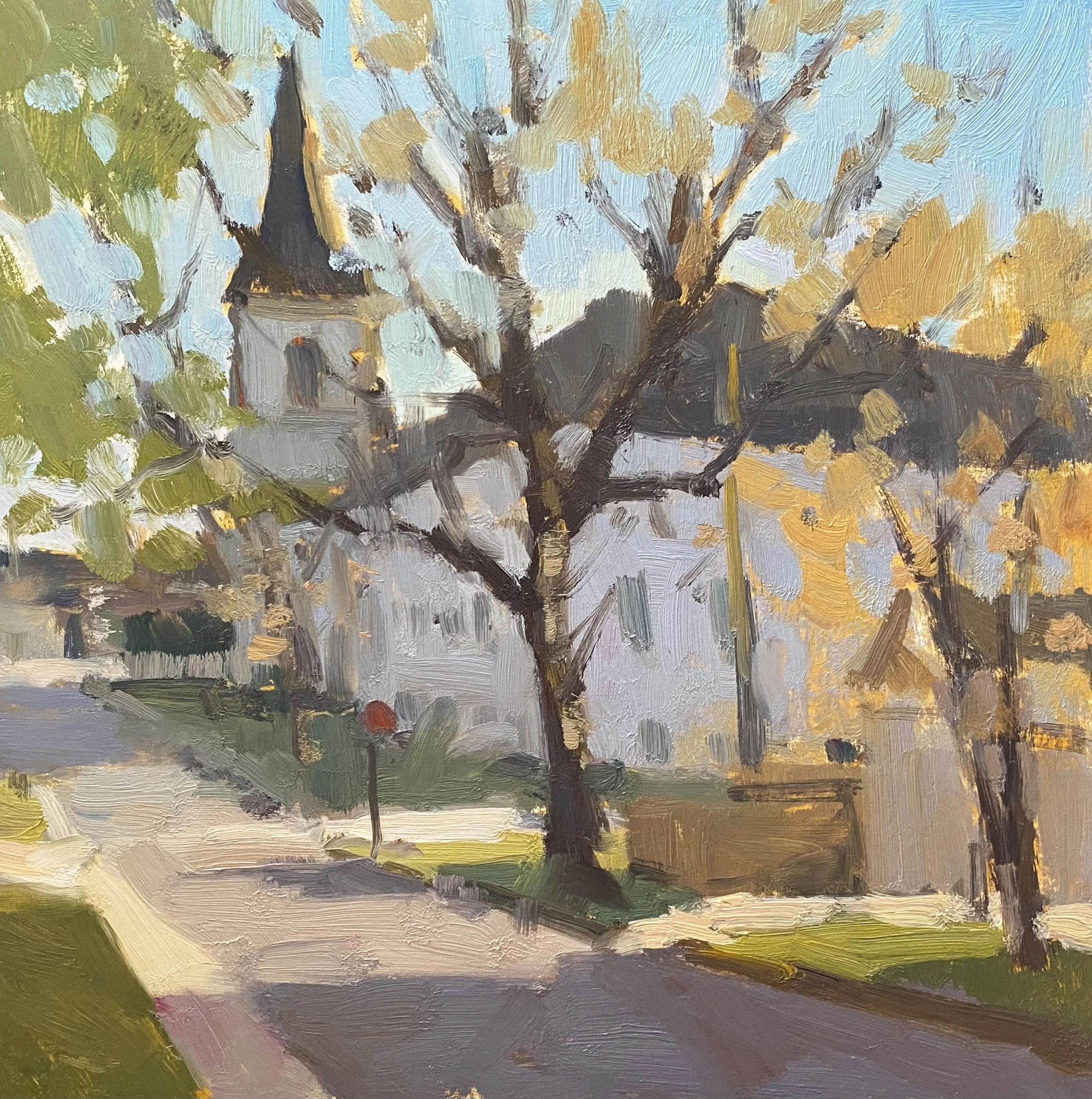
I recently revisited a 1987 American Artist Magazine article by Charles Movalli called In Praise of the Painterly Painter, in which he extols the virtues of “rough painting”. He describes this term as, “not just a style, but a way of thinking about the world”. He also mentions “the school of intellect and (vs.) the school of intuition”, where he acknowledges how an artist can think too much about technique instead of addressing the emotion the subject brings forth. He mentions Robert Henri’s The Art Spirit and Charles Hawthorne‘s Hawthorne on Painting, and points out how the words economy, mystery, joy, and invention are most prevalent throughout the books and are core to the thought process of the Painterly Painter. Movalli also quotes an artist friend as saying that “The Painterly Painter avoids the “how to” approach, suspicious as ever that technique will obscure his vision”. He then goes on to say, “Facts and details cannot convey it (elusive qualities of the subject). If anything, facts, as Tolstoy said, stand in the way of the truth. That’s what Van Gogh meant when he told his brother that his life as a painter was devoted to finding those lies that would give him the truth. The lies – the exaggerations and omissions – are what convey an experience to the viewer”. As art students, we are often taught that detail and polish are the goal. For me, the sparkle is in what is “exaggerated or omitted”, inviting the viewer to participate and therefore connect to the artist and their experience.
“There’s a value to spontaneity that finish can never equal. The Painterly Painter uses the viewer’s experience to give life to the work.”
I’ve been teaching for quite a long time now, and in the vein of being a Painterly Painter, the question is, when to think (intellectual) and when not to think (intuition)? Circling back to the ABC’s and the laborious feeling of trying to get the letters correct, I’ve learned to separate thinking from the act of painting because of the mileage I’ve put in. What that means is practicing your art (as if you are learning the ABC’s) over and over and over and then practice some more. That repetition, over the course of time, will eventually equal intuition and spontaneity.
To become a Painterly Painter, there are things you can do to place yourself on the path of painting loose and free. Find a varied array of tools that take you out of your comfort zone. Take workshops to get a handle on the fundamentals (values, design, color-mixing, brushwork, etc.), and practice practice practice. Learn from others you admire. Paint from direct observation, outdoors or still life, or both. Do some stretching exercises before the marathon (sketching!). Get your mise en place (a French culinary term meaning "everything in its place”) before baking the cake (or painting a painting). A little thought beforehand yields a spontaneous result. To quote another favorite artist, Sergei Bogart, “Think like turtle, paint like rabbit”.
If you need a little guidance and look for accountability, know that when you take a workshop with me, you will learn to quickly work through the intellect, so that the majority of your painting experience is driven by intuition. In my own practice, I have developed an approach that streamlines the painting process. In my workshops, I share that approach with you to offer a springboard for your own unique painting style.
https://anneblairbrown.com/workshops-and-mentoring
https://anneblairbrown.com/instructional-videos